
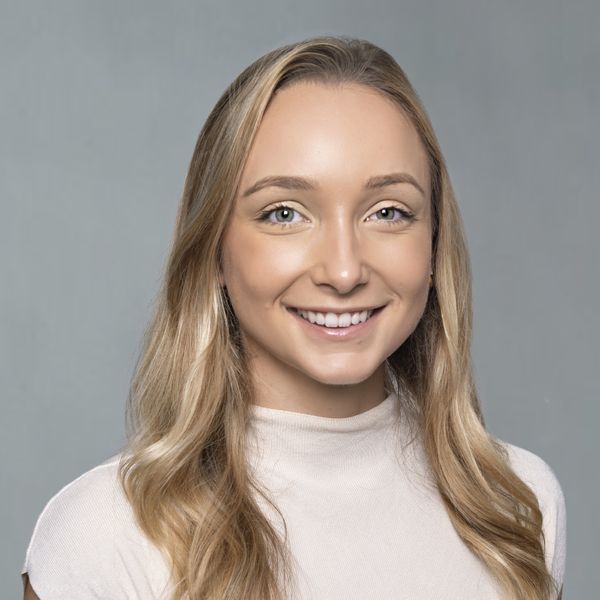
Julia Shuluk, Ph.D.
Scientific Advisor
Julia joined the firm in 2026 after earning her Ph.D. in Organic Chemistry from the University of Texas at Austin, where she worked extensively with sequence-defined oligourethane polymers across diverse applications in automation, molecular data storage, and sustainable materials. During her doctoral training, she co-authored multiple peer-reviewed publications and contributed as an inventor to two provisional patent applications. Julia also holds a B.S. in Biochemistry from California State University, Sacramento.
While in graduate school, Julia completed a co-operative education internship at Merck’s headquarters in Rahway, NJ, and later served as a business development and technology analyst intern with the University of Texas at Austin’s technology transfer office (Discovery to Impact). At Merck, she gained experience in pharmaceutical research and development and further refined her automation and physical organic chemistry background, developing automated workflows for kinetic profiling and time course data collection of enzymatic reactions. At Discovery to Impact, she conducted patentability assessments, prior art searches, and market analyses for emerging university technologies.
Experience
Julia’s scientific background encompasses organic, physical organic, and analytical chemistry. Her experience includes organic synthesis, laboratory automation, high-throughput experimentation, sequence-defined polymers, molecular data storage, mechanistic analysis, and small- and large-molecule characterization. At pH IP Law, Julia works closely with patent attorneys and agents in the drafting and prosecution of patent applications across a broad range of chemical technologies, including small-molecule therapeutics.
Publications
- Shuluk, J.R.; Fargher, H. A.; Anslyn, E. V. The Utility of Chain-End Degradation for De Novo Sequencing of Sequence-Defined Oligourethanes. Acc. Chem. Res., 2026, 59(6), 958-968.
- Fargher, H. A.; Lim, J; Shuluk, J. R.; Wight, C. D.; Asche, S.; Devireddy, P.; Zhou, Y.; Vera, M.; Dahlhauser, S. D.; Bhadra, S.; Maggiori, C.; Johnson, S.; Graham, H.; Ellington, A.; Anslyn, E. V. A compositionally-biased oligourethane sensor array to differentiate solids by their surface chemistry – an analogy to the sense of touch. J. Am. Chem. Soc. 2025, 147, 31300−31309.
- “Compositions and methods for encrypting, storing, and decrypting information in oligomers”, PCT International Publication No. WO 2025/058677 A2, Published March 20, 2025. Inventors: Eric Anslyn, Livia Schiavinato Eberlin, Sarah Moor, Samuel Dahlhauser, Mary King, Christopher Wight, James R. Howard, Julia Shuluk.
- James, J.; Shuluk, J.; Howard, J.; Anslyn, E. V. What is going on with all those seemingly non-sensical lines, clusters of dots, and tree diagrams in machine learning papers? Part 1 multiple linear regression. Supramolecular Chemistry 2025, 1-7.
- Shuluk, J. R., Wight, C. D., Howard, J. R., King, M. E., Moor, S. R., DeHoog, R. J., Dahlhauser, S. D., Eberlin, L. S., Anslyn, E. V. A Workflow Enabling the Automated Synthesis, Chain-End Degradation, and Rapid Mass Spectrometry Analysis for Molecular Information Storage in Sequence-Defined Oligourethanes. JACS Au 2025, 5(3), 1232-1242.
- Howard, J. R., Shuluk, J. R., Bhakare, A., Anslyn, E. V. Data-science-guided calibration curve prediction of an MLCT-based ee determination assay for chiral amines. Chem 2024, 10(7), 2074-2088.
- Shuluk, J. R., Metola, P., Anslyn, E. V. Machine learning is coming. Supramolecular Chemistry 2024, 34(7), 260-263.
Education
- 2026 – Ph.D., Organic Chemistry, University of Texas at Austin
- 2021 – B.S., Biochemistry with a minor in Biology, cum laude, California State University, Sacramento